
MGE Continues to Expand its Use of Agrivoltaics at Local Solar Facilities
In 2024, Madison Gas and Electric (MGE) introduced grazing sheep at the Company’s 6-megawatt (MW) Tyto Solar array in Fitchburg. The sheep help control ground cover during the growing season, maintaining grass and brush in a sustainable way.
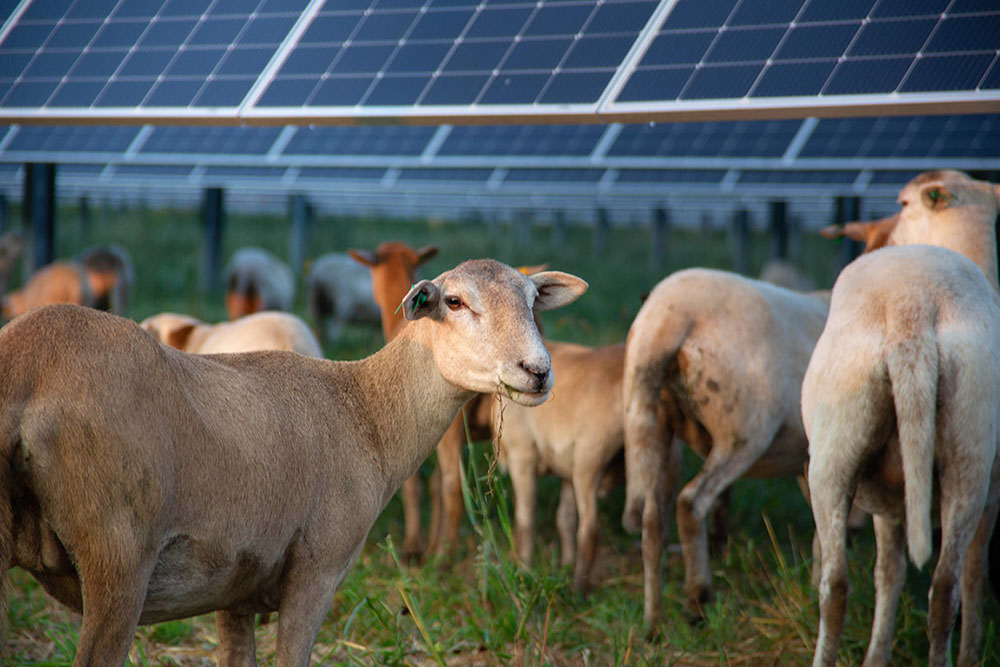
The practice is an example of agrivoltaics, or dual-use solar, in which land is used for both solar generation and agriculture. MGE expanded its use of solar grazing the following year to the Company’s nearby Strix Solar facility and to the Hermsdorf Solar Fields in Madison.
The introduction of solar grazing built on the Company’s commitment to providing pollinator habitat through native plantings at some of its local solar generation facilities, including Dane County Airport Solar, Hermsdorf Solar Fields, Morey Field Solar and the O’Brien Solar Fields.
Pollinator habitats are shrinking. As native vegetation is replaced by roads, manicured lawns and non-native gardens, pollinators lose necessary food and nesting sites.
A pollinator is a bee, butterfly or other agent that transfers pollen from one plant to another. This process enables fertilization and the production of food such as seeds, fruits and nuts.
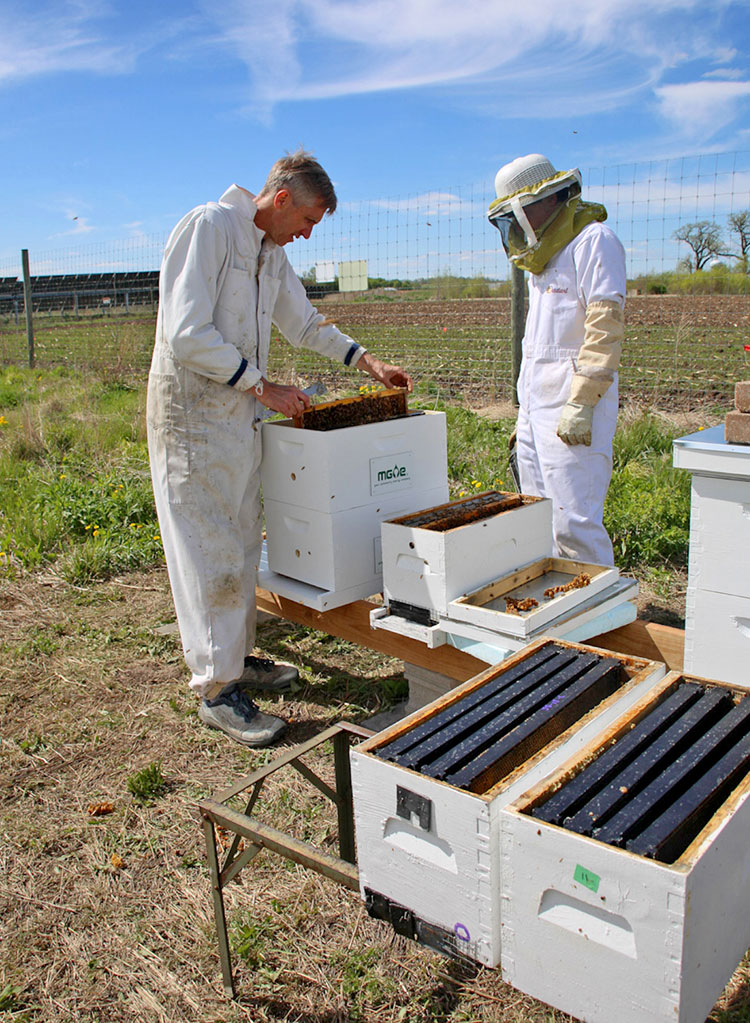
Hives for honey bees added to the mix
This spring, MGE welcomed honey bees to the O'Brien Solar Fields, a 22-MW solar array in Fitchburg, Wis., and one of the Company’s initial pollinator sites. In partnership with a local beekeeper, five bee hives were set up and a colony of honey bees now resides at the solar array.
The addition of hives further expands MGE’s practice of agrivoltaics. The bees collect nectar from some of the native pollinator plants at the site, contributing to the ecosystem. The bees also search for nectar elsewhere, typically traveling up to two miles from the hive to secure nectar from preferred sources.